




The Best 4G LTE Router for Travel

Hi, everyone.
Could you please tell me what the best 4G LTE router for travel is right now?
I saw the GL-X750 model on the LibreCMC website, but I didn’t find this modem with its large antennas very convenient.
A more interesting model is the GL.iNet GL-E750V2 (MUDI) 4G LTE Portable Wi-Fi.
But there is no firmware for this model on the LibreCMC website, even though these models have the same CPU—the QCA9531, @650MHz SoC
MUDI V2 => https://www.gl-inet.com/products/gl-e750/
Spitz (GL-X750) => https://www.gl-inet.com/products/gl-x750/
If anyone has used this company's devices, I want to say that their software is incredibly slow and bloated, so right after you buy one, you should remove the stock firmware and install LibreCMC or OpenWRT.

 I am a member!
What about ThinkPenguin?
https://thinkpenguin.com/gnu-linux/usb-4g-lte-advanced-modem-gnu-linux-tpe-usb4g2us
I know, it's a modem, not a router.
Hello Calher.
Thanks for your reply.
Yeah, I saw that option, but it’s not the best one—I’ll explain why.
Let’s say a user buys a TPE-R1300 for $100, plus a TPE-USB4G2US for $110, plus a power bank for, say, $50—and you end up with a huge setup full of wires and no display, all for a lot of money! ))
The MUDI V2 or Spitz (GL-X750) is a ready-made solution for about $100–150, depending on where you live.
I don’t understand why the LibreCMC developers chose the Spitz (GL-X750) over the MUDI (GL-E750).
Here are some photos to help clarify things for anyone reading this post.
|------MUDI-V2-------|--------Spitz--------|
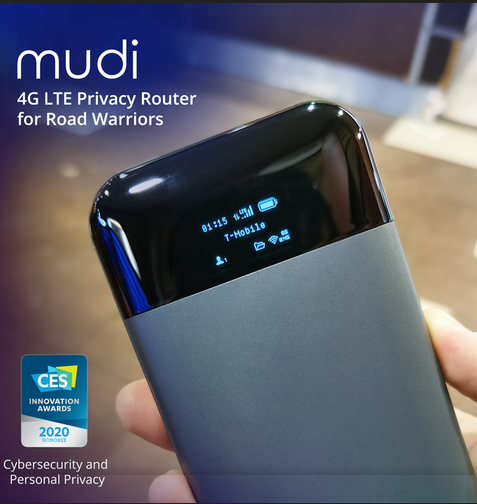
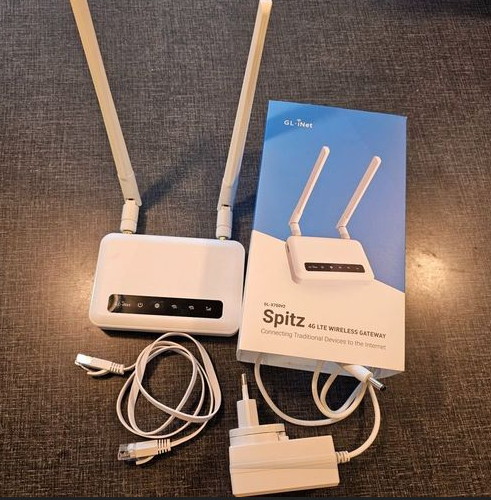
Hello Avron,
Thank you for your reply.
Yes, I’ve seen all these devices, but the major issue with them is that 128MB (DDR2) of memory is very little.
If you use these devices as a repeater, then yes, but if you install various programmes on them, they’ll run very slowly.
LibreCMC has a very limited selection of programmes; the developer believes that WireGuard is the most reliable protection, without realising that this protocol has been easily detected and blocked for several years now. DNSCrypt-Proxy2 isn’t in the repository, and there are plenty of examples like this.
For example, the new Mudi 7 model has just been released, which features 2GB of LPDDR4X https://www.gl-inet.com/products/gl-e5800/
If, as you mentioned, the GL-XE300 doesn’t support LibreCMC but does support OpenWRT, then it’s better to buy a device with more memory and OpenWRT support

I am a translator!
if you install various programmes on them, they’ll run very slowly
Which programme do you want to install? OpenWRT and libreCMC are meant to work as router, not to install programmes. I configured an openvpn client on those router, it is rather slow, but this is because of the CPU, not because of a lack of memory.
With respect to Turris, I recently started using a Turris omnia at home instead of libreCMC on a nanopi R4S because unfortunately, the latest versions of libreCMC are lacking some package to configure an openvpn server.
There’s an interesting project: 4G routers and modular routers from a company called ‘Turris’ Admittedly, these routers aren’t quite as stylish as Gl.inet’s, but their modular design makes them very promising. They feature an ARMv8 CPU, 512 MB of DDR3 RAM etc
You can view some of the models here https://linitx.com/category/modular-routers/1305